BRIC-RGCB researchers develop novel nanopore sensors for early detection of Parkinson’s disease
Trivandrum / August 28, 2026
Thiruvananthapuram, Aug 28: Researchers at the BRIC-Rajiv Gandhi Centre for Biotechnology (BRIC-RGCB) have developed an innovative nanopore-based sensing technology that could pave the way for the early detection and monitoring of biomarkers associated with neurodegenerative diseases such as Parkinson’s disease and amyotrophic lateral sclerosis (ALS). Biomarkers are biological indicators of diseases that can be used for early detection, and nanopores are extremely small hollow structures.
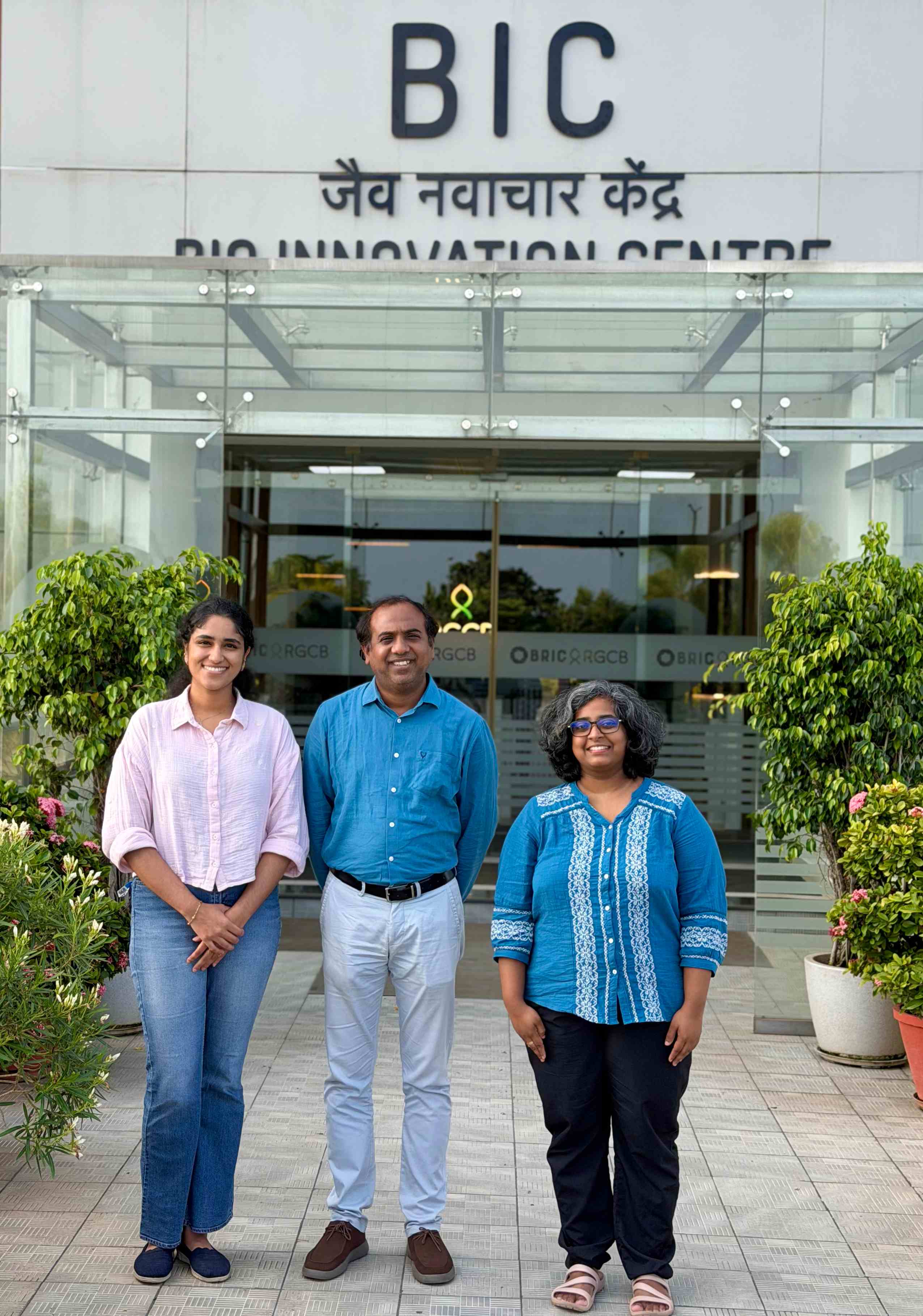
However, detecting biomarkers at an early stage using conventional techniques remains challenging. This is because many of these biomarkers occur at extremely low concentrations. Addressing this challenge, a research team, led by Dr. Mahendran K. R., with contributions from his PhD student Varsha Shaji and postdoctoral researcher Dr. Neethu Puthumadathil, has designed novel ‘self-assembling dual-diameter’ nanopore sensors capable of detecting such biomarkers with high sensitivity.
The ground-breaking research, published in Nature Nanotechnology, represents a significant advance in nanoscience and biomolecular sensing. In the new approach, the researchers designed short peptides that form pores of varying sizes, providing a versatile platform for sensing biomolecules with different shapes and dimensions. The sensors distinguish disease and non-disease-associated forms of the biomarkers, even when they were present in complex protein mixtures at very low concentrations.
In the future, these innovative sensors can be used to develop point-of-care devices that detect biomarkers associated with various diseases, such as cancer, directly from biological fluids, including blood. The nanopore architecture developed in the study was inspired by nature and is distinct from computational nanopore design pioneered by Nobel Laureate Prof. David Baker. Combining nature-inspired pores with computational design could lead to the development of even more sensitive nanopore sensors in the future.
BRIC-RGCB Director Dr. Beena Pillai said, “Early and accurate detection remains a major challenge in managing neurodegenerative diseases such as Parkinson’s and ALS. The nanopore sensor platform demonstrates how advances in nanotechnology and biotechnology can come together to address a critical unmet need in healthcare.”
The work was carried out in collaboration with Dr. Ulrich Kleinekathöfer’s group at Constructor University, Germany, and Dr. Krishnananda Chattopadhyay’s group at CSIR-Indian Institute of Chemical Biology (CSIR-IICB), Kolkata. The study was supported by grants from the Department of Biotechnology, the Department of Science and Technology, the Indian Council of Medical Research, and the Council of Scientific & Industrial Research, Govt. of India.
Ends
Photo Gallery
Content
Latest PRESS RELEASES
-
International Cyber Women’s Day seminar held at Government Cyberpark
September 1, 2026
-
ഗവ. സൈബര്പാര്ക്കില് അന്താരാഷ്ട്ര സൈബർ വനിതാ ദിന സെമിനാര്
September 1, 2026
-
Infopark Cherthala hosts ‘Inforhythm 2026’
September 1, 2026