Something’s rotten in the system that endangers Nature and ecology: KMB Artist Adrián Villar Rojas’ Freezers
Kochi / March 27, 2026
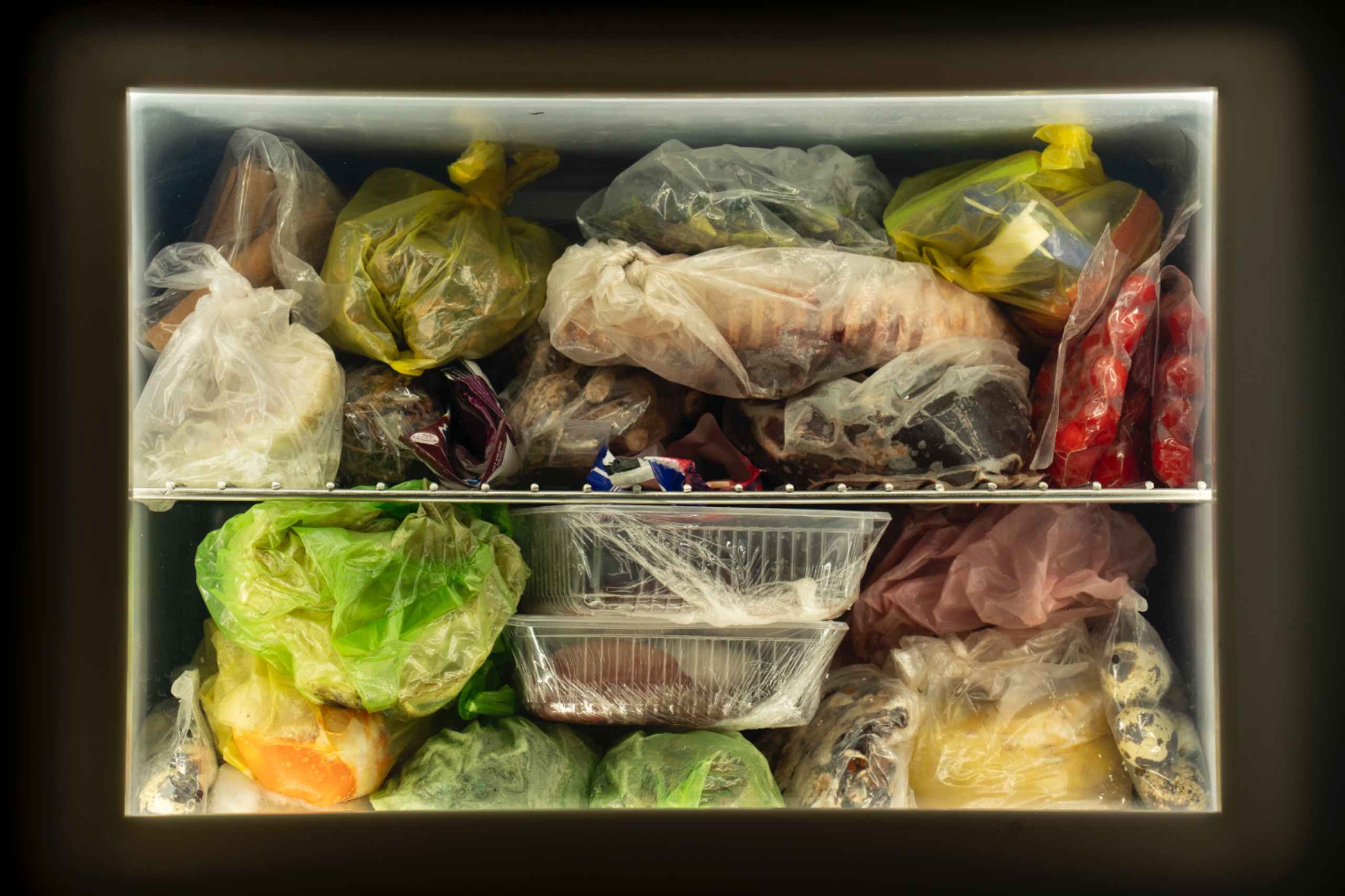
Kochi, Mar 27: The light from the half-open fridges reveals foreboding truths of future as mankind goes ahead exploiting Nature for commercial gains. Each object inside the kitchen, displayed in artistic and thought-provoking ways recalling the dead in coffin-like freezers, is layered with narratives.
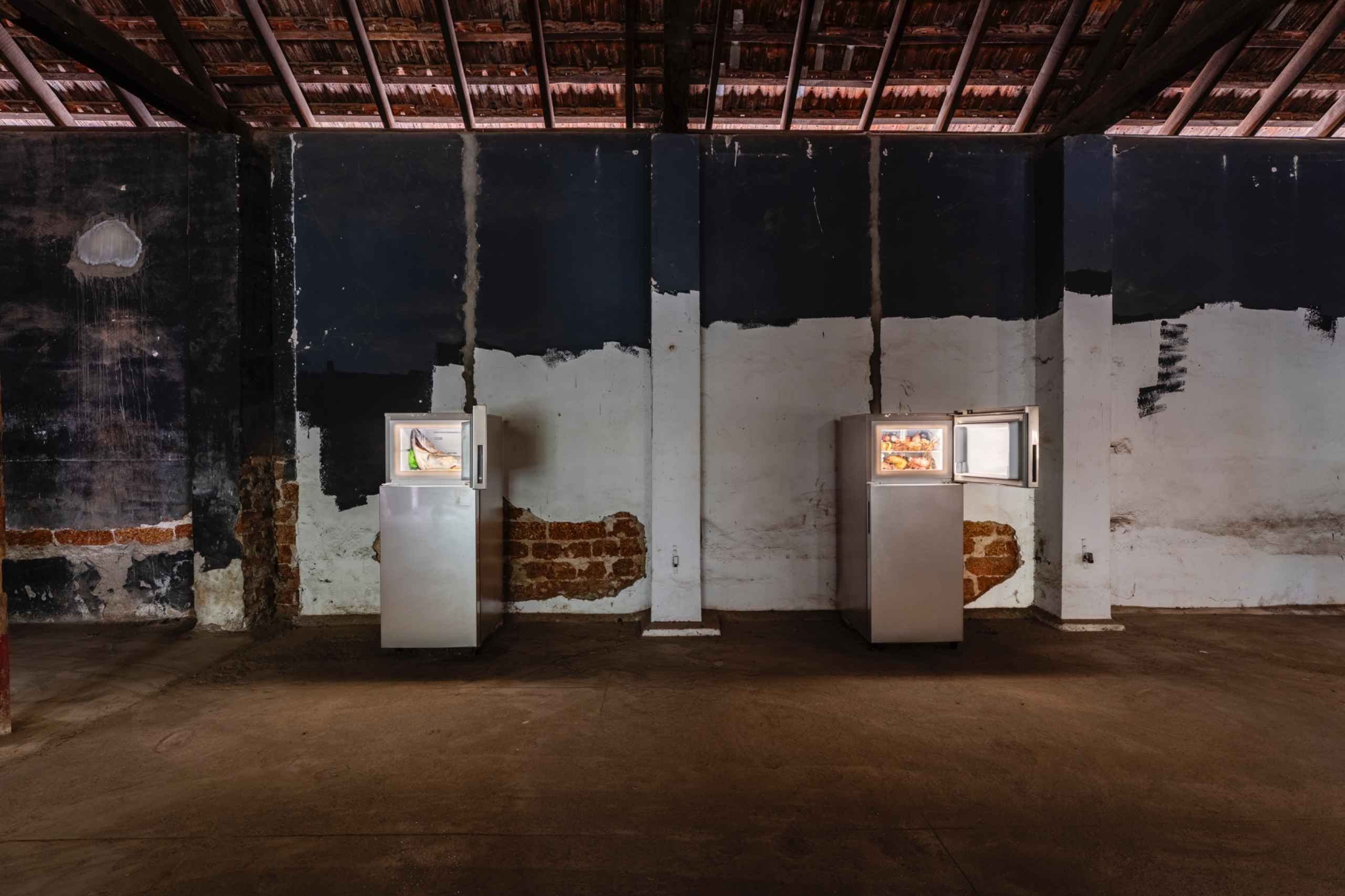
Argentine-Peruvian artist Adrián Villar Rojas has featured six assemblages in the dark Coir Godown, Aspinwal House, Fort Kochi, two on each side of the wall, as part of the Kochi-Muziris Biennale (KMB) ending on March 31.
Viewers subconsciously become part of the ecology created. Fruits, vegetables, and beverages are arranged with manufactured, the processed, tinned and bottled, from stores and all covered in plastic, chunks of meat and fish arranged attractively yet repulsive in their decaying state, some even fungi-ridden, frost-bitten.
The still yet living installation raises question on temporal, spatial, temporary and permanent aspects. It is part of Adrián’s 2015-ongoing series, titled Rinascimento (Renaissance in Italian).
It shows how preservation or renewal and decay coexist as he explores Anthropocene, the changing world since its existence and its extinction.
The frozen arrangements imply that all systems—the natural, artistic and cultural—are prone to change aligning with the KMB theme, for the time being. The force of human action connects the past, present and future as hinted through the choice of materials. Moreover, he creates narratives of how humans and environs respond to man-made objects. The freezers are metaphors in his works, each model changing just as appliances and gadgets do along with ecology.
The natural and the machines coexist leading to more hybrid ecosystems in all walks of life seen around the world at the cost of much-needed ecosystems for survival. The more humans disrupt natural rhythms, the more it is reflected in the living things. The fragments in them keep changing and their fragility and transformation depict the futility of humankind’s concept of control and permanence.
The arrangements mimic dioramas that act as a museum to showcase various ecosystems, explain science and conservation of art.
Adrián seems to question the museum and the culture it archives, whether they are frozen or alive, their existence and relevance in future. The objects displayed speak of reckless capitalism, production, consumption, and wastage as well. The artist spurs dialogue on the technology behind the freezer, the scientific viewing of his diorama, and ecological impact on the future.
“It’s a site-specific work and all the materials are sourced locally creating mutant hybrid entities.
The origins of each item reflect the expansive supply chains of national and international food production. I’m keen on playing with meaning, manipulating meaning with museum language. I want to show the amputation, I want to make it evident, and for this to happen, museology needs to appear when the work is asked to reappear. In many ways, the next installation of the work should deliberately say, ‘This thing is incomplete, useless,’” said Adrián.
His work is ambiguous just as the whole world is casting a doubt whether culture is revived, rediscovered, or merely recycled in distorted forms. The tug of war between man and machines; permanence, control and the temporary; history and geography; and archaeology and ecology go on even as uncertainty looms as humans transform the face of earth by the hour.
ENDS
Latest PRESS RELEASES
-
International Cyber Women’s Day seminar held at Government Cyberpark
September 1, 2026
-
ഗവ. സൈബര്പാര്ക്കില് അന്താരാഷ്ട്ര സൈബർ വനിതാ ദിന സെമിനാര്
September 1, 2026
-
Infopark Cherthala hosts ‘Inforhythm 2026’
September 1, 2026