Biennale holds conference on ‘Common Ground: Institution Building in South Asia’
Kochi / February 5, 2026
Kochi, February 5: The two-day conference, titled ‘Common Ground: Institution Building in South Asia’, held as part of the ongoing Kochi-Muziris Biennale (KMB), concluded in Fort Kochi exploring themes such as discourse and dialogue, collective practice, community engagement, and art in public spaces.
The conference, held at the Pavilion, Bastion Bungalow, brought together artists, curators, cultural practitioners, and thinkers from South Asia and beyond to engage in discussions on institution-building, community practices, and the role of art in responding to contemporary social realities.
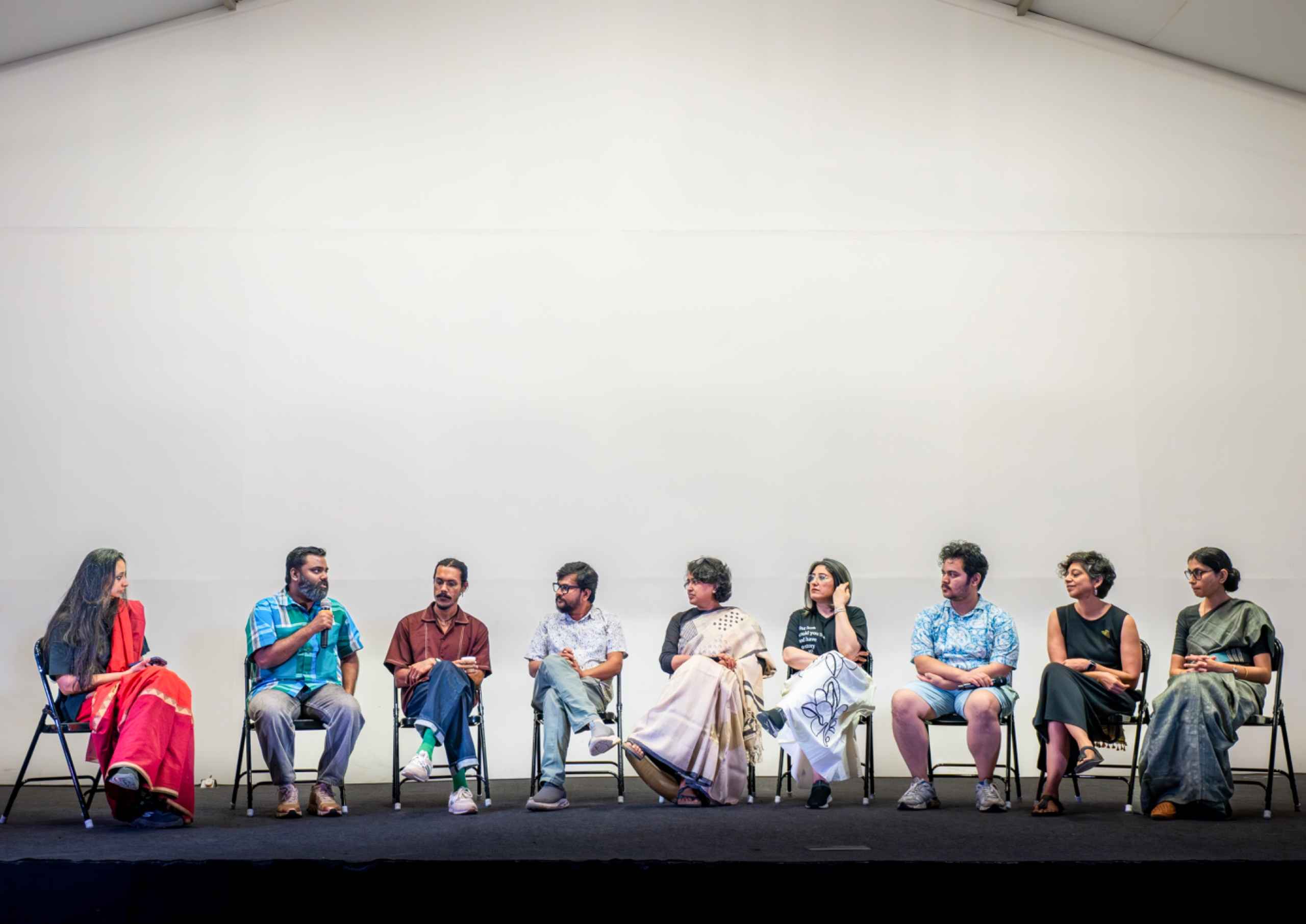
The sessions featured a series of talks, presentations, and ended with a panel discussion. Among the speakers were Pradip Das, Ruchira Das, Uma Ray, Shiva Pathak, Mayun Shavinda Kaluthanthri, Neha Kudchadkar, and Priyankar Chand, also Sarker Protick, who joined online.
A panel discussion, titled ‘Against All Odds: Community as Practice’, was moderated by Mario D’Souza.
During the panel discussion, Ruchira Das discussed the internal challenges of sustaining a large-scale artistic endeavour.
Visual artist Uma Ray, reflecting on her three-year journey leading Birla Academy of Art and Culture, an art gallery in Kolkata, shared her profound insights on the importance of inheritance and evolution in the arts. Drawing from her diverse background, she emphasised the transition from simply carrying forward a legacy to actively shaping it for future generations through archival and innovative practices.
Shiva Pathak underscored the vital need for professional and creative adaptation, noting that there comes a point where one must simply stop. She reflected on how creators often become fixated on reaching prestigious milestones, such as a tenth or twenty-fifth edition, simply because they have been working in a field for so many years. However, Pathak argued that even if a project ends after only five or six iterations—numbers that might not sound as impressive—it remains a valid decision if the creator’s presence is no longer required in that specific space.
“By returning to the foundational question of ‘why’ a project exists, the groundwork is laid for the next major development in one’s life or art, she said, noting creators can lay the groundwork for new directions even though the act of pausing is as essential as the act of creation.
These insightful sessions reflected on the roles, challenges, and possibilities of art institutions and festival spaces.
ENDS
Photo Gallery
Content
Latest PRESS RELEASES
-
International Cyber Women’s Day seminar held at Government Cyberpark
September 1, 2026
-
ഗവ. സൈബര്പാര്ക്കില് അന്താരാഷ്ട്ര സൈബർ വനിതാ ദിന സെമിനാര്
September 1, 2026
-
Infopark Cherthala hosts ‘Inforhythm 2026’
September 1, 2026