Short story captures a ‘fragment’ or a ‘moment’ of life: Sangeetha Srinivasan at KBF conference
Kochi / February 6, 2026
Kochi, Feb 06: Writing is inherently an act of power, acclaimed writer Sara Joseph said at the Kochi Biennale Foundation three-day literary conference, “Short Stories, Long Shadows: Contemporary Malayalam Voices,” held at the Pavilion, Bastion Bungalow, Fort Kochi.
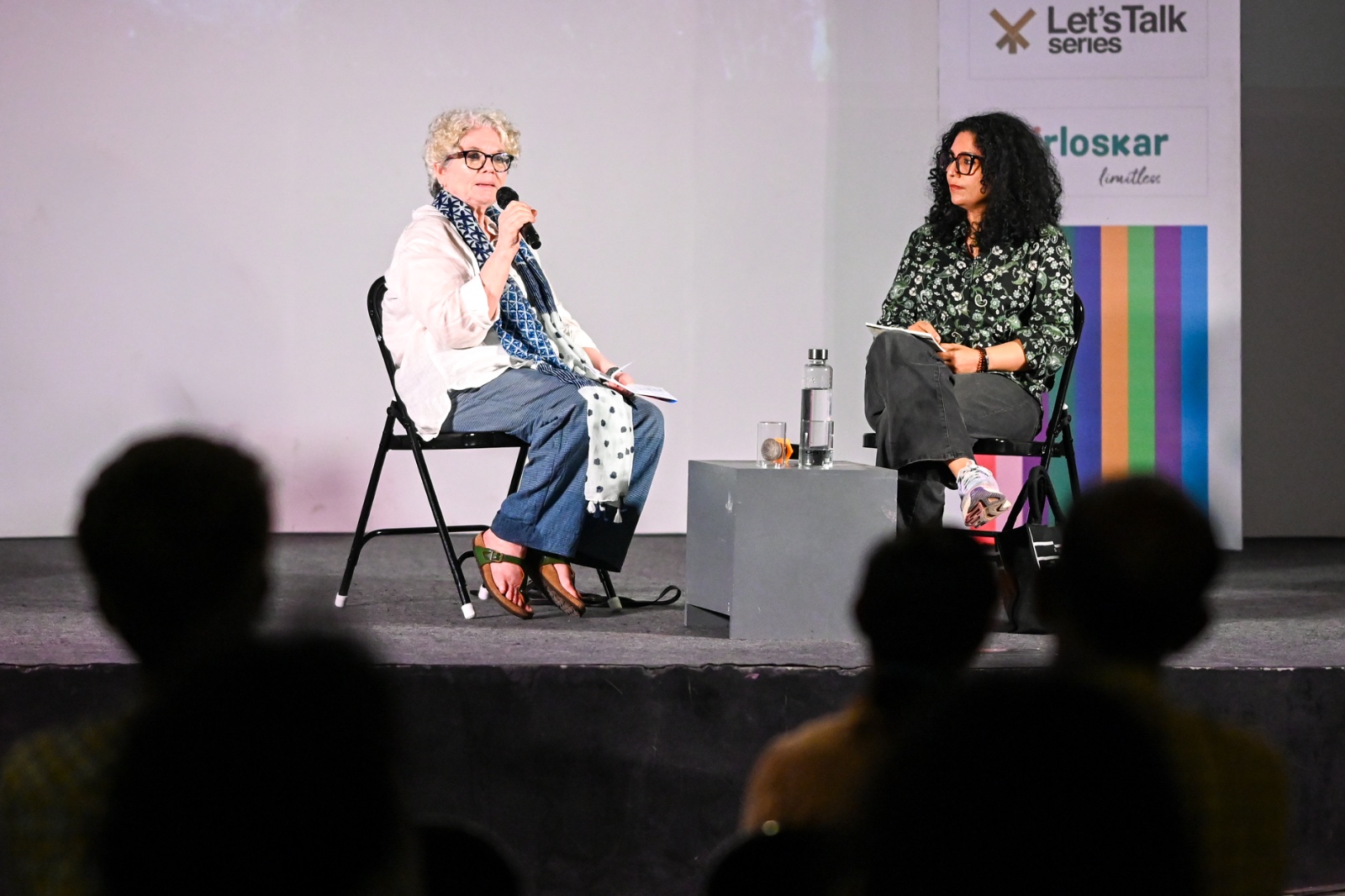
The Day 2 opened with an ‘In Conversation’ session featuring acclaimed writer Sara Joseph in dialogue with Sangeetha Srinivasan, where the speakers reflected on evolving literary voices, creative processes, and the social contexts shaping contemporary writing.
Drawing parallels between short stories and art installations, Sangeetha observed that a short story, much like an installation at an art biennale, captures a “fragment” or a “moment of life,” rather than offering a complete life history in the way a novel does.
Sara noted that her stories often originate from a vivid mental image or a specific “frame.” She cited her story Thoongikkidakkunna Jalakam, which emerged from the visual of a hanging window, and Amaravalli, inspired by the sight of an amaravalli plant growing in the courtyard of a modest house, alive with small insects and white and violet flowers.
Reflecting on gender, Sara remarked, “Writing is inherently an act of power, and when that power is held by men, women are forced to struggle from the very beginning—from the first writers and singers to the first dancers—fighting to claim small spaces for themselves.”
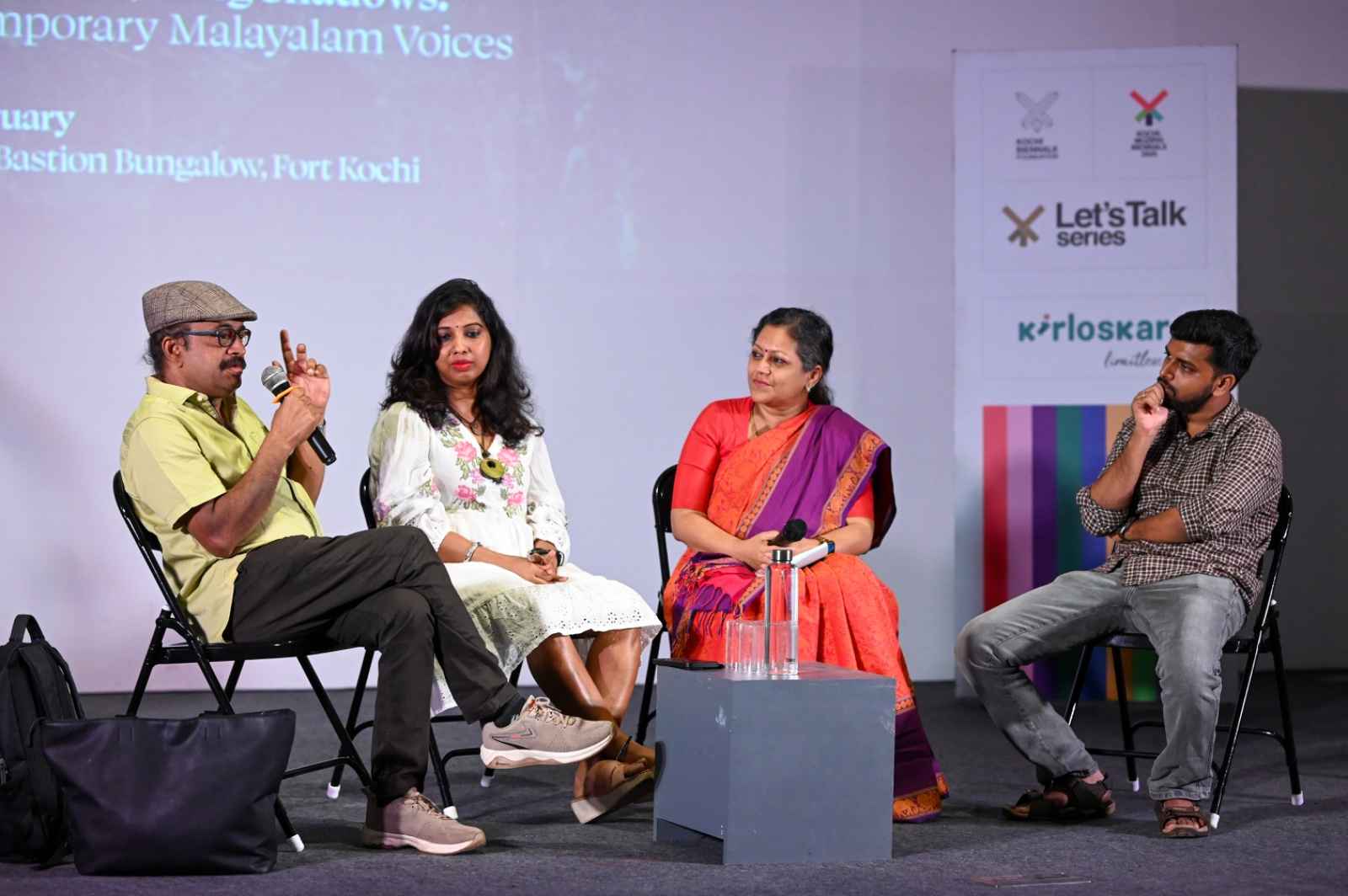
The session was followed by a panel discussion on “Form, Language, and Precision,” which examined the craft of storytelling and the importance of linguistic clarity in Malayalam literature.
The panel featured M. Nandakumar, R. Shyamkrishnan, and Aash Ashita, and was moderated by Priya K. Nair. The discussion explored how form and language shape meaning, readership, and literary innovation.
During the panel, Aash Ashita emphasized that many readers from the current generation find it difficult to connect with traditional literature due to a growing relatability gap. She explained that when writers describe childhoods rooted in village life from 30 years ago, these depictions often fail to resonate with contemporary readers in their mid-twenties, whose visual experiences and everyday realities are vastly different.
She argued that writers must address present-day concerns and create narratives that younger generations can identify with.
Writer R. Shyamkrishnan noted that while visual elements are important, a story must ultimately evoke emotion. “A story cannot move forward on visuals alone; it must touch the reader deeply in some way,” he said.
M. Nandakumar reflected on the origins of storytelling, stating that stories often emerge from the surroundings of an idea. He observed that a story does not always require a clearly defined theme, pointing to studies of Anton Chekhov’s work, which show how even a simple impression or sensation can develop into a story.
He described storytelling as a process where experience, idea, and thought blend together, while noting that not every feeling can be transformed into a narrative. He further explained that every story contains an element of the “inarticulate”—something that cannot be fully expressed in words—and that this is what writers attempt to convey through language, style, and narrative technique.
At times, he added, a story may feel impossible to fully articulate, leading writers to return repeatedly to the act of writing in search of expression.
ENDS
Latest PRESS RELEASES
-
International Cyber Women’s Day seminar held at Government Cyberpark
September 1, 2026
-
ഗവ. സൈബര്പാര്ക്കില് അന്താരാഷ്ട്ര സൈബർ വനിതാ ദിന സെമിനാര്
September 1, 2026
-
Infopark Cherthala hosts ‘Inforhythm 2026’
September 1, 2026