Assam’s 500-year-old Bhaona comes alive at Kochi Biennale
Kochi / February 2, 2026
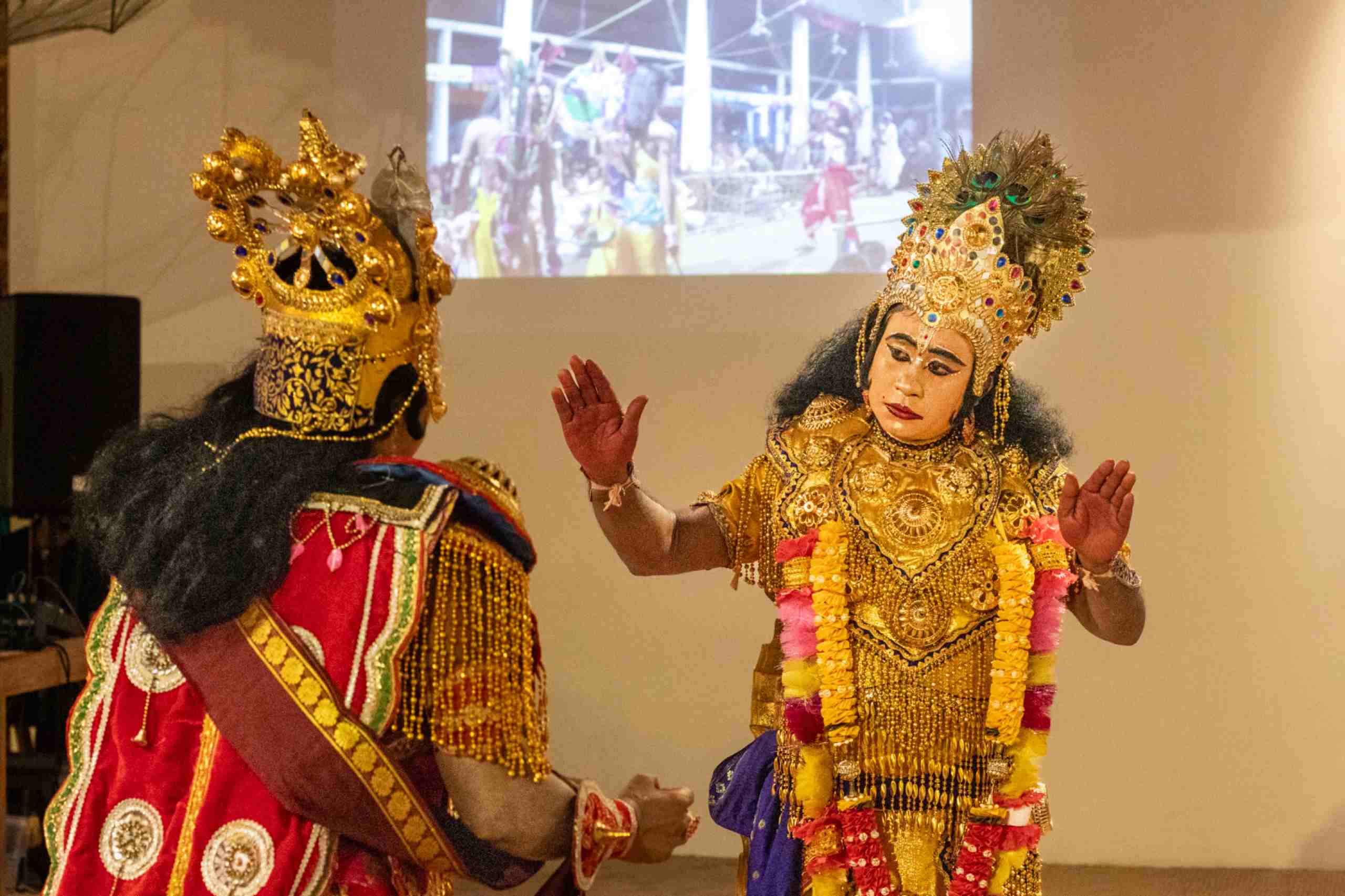
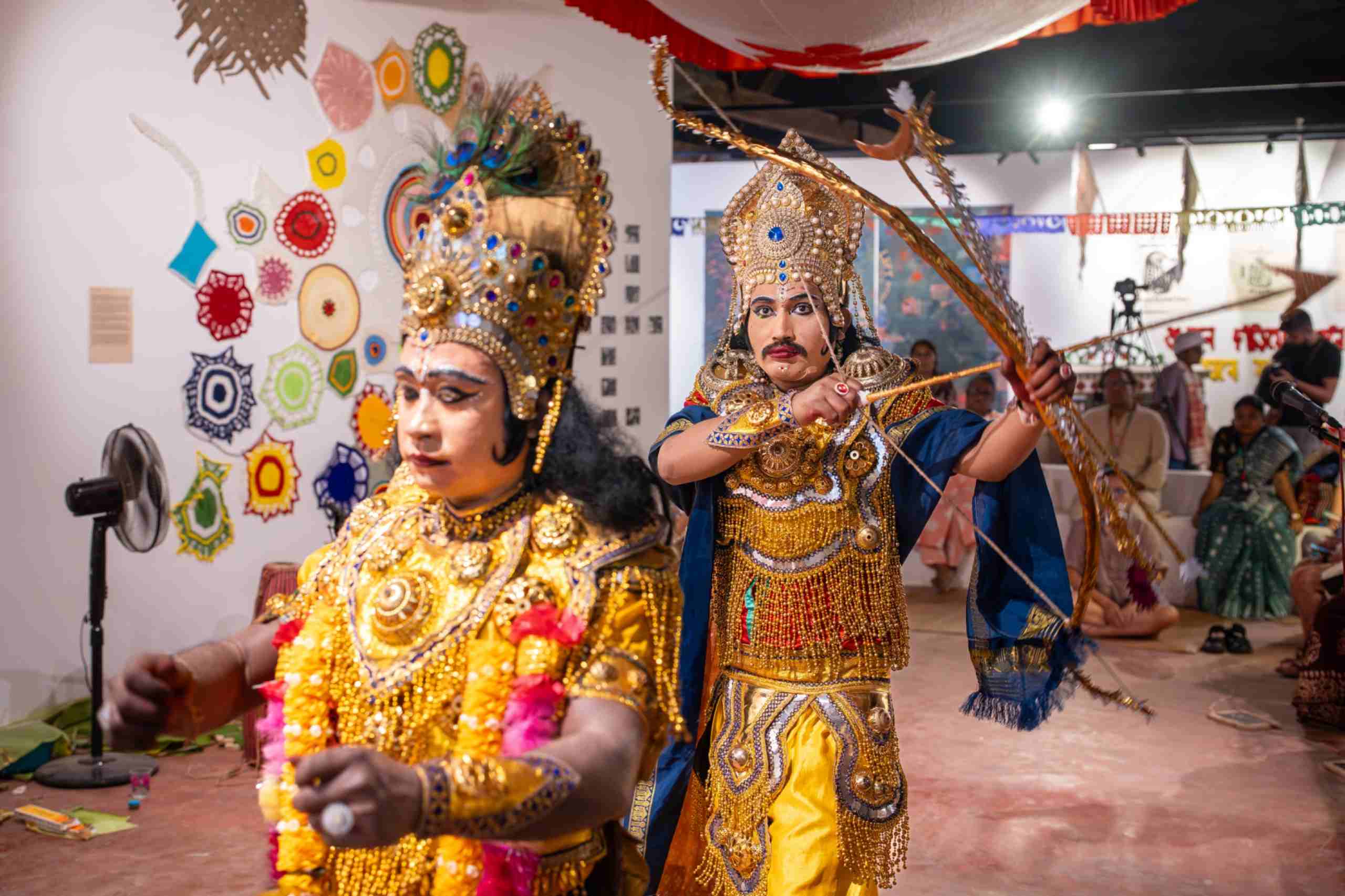
Kochi, Feb 02: A centuries-old theatrical tradition from Assam took centre stage at the Aspinwall venue of the Kochi-Muziris Biennale this week, as the Panjeri Artist Union presented a three-day showcase of Bhaona, a 500-year-old performance form rooted in Vaishnavite philosophy and community storytelling.
The dance presentation, narrating the killing of Karna in the Mahabharat War, brought a rare, living ritual practice into the contemporary art spotlight, drawing Biennale audiences into a rich synthesis of theatre, music and devotion shaped by the legacy of 15th-century saint Srimanta Sankardev.
Rooted in the Vaishnavite movement of the 15th century, Bhaona was conceived by the saint, reformer and polymath Srimanta Sankardev as a means to communicate spiritual and ethical ideas through accessible, engaging theatre.
What emerged at Aspinwall was not merely a performance but a living cultural practice, carried across centuries and geographies, now finding space within one of South Asia’s most significant contemporary art platforms.
At the heart of Bhaona is the Ankiya Nat, a one-act play structured around episodes from the epics and Puranic narratives. The performance is anchored by the Sutradhar, a commanding narrator who introduces scenes, recites shlokas, and guides the audience through moral and philosophical arcs. This narrative spine allows Bhaona to balance instruction with entertainment, a quality that has ensured its endurance across generations.
Traditionally scripted in Brajabuli, a literary language developed specifically for devotional expression, the dialogues and verses carry a musical cadence even in speech. At Aspinwall, this linguistic heritage was complemented by the unmistakable sonic presence of the khol drum and cymbals, whose rhythmic patterns shaped the tempo of both movement and mood.
Dance and music functioned not as embellishments but as integral narrative tools, merging gesture, rhythm and emotion.
Historically performed in namghars and sattras Assam’s prayer houses and monastic spaces, Bhaona’s presentation within the Biennale context subtly reconfigured its setting without diluting its spiritual core. The Panjeri Artist Union’s involvement ensured that the form retained its ritual integrity while opening itself to new audiences, many encountering Bhaona for the first time.
ENDS
Latest PRESS RELEASES
-
International Cyber Women’s Day seminar held at Government Cyberpark
September 1, 2026
-
ഗവ. സൈബര്പാര്ക്കില് അന്താരാഷ്ട്ര സൈബർ വനിതാ ദിന സെമിനാര്
September 1, 2026
-
Infopark Cherthala hosts ‘Inforhythm 2026’
September 1, 2026